The Sacred Bond of Marriage
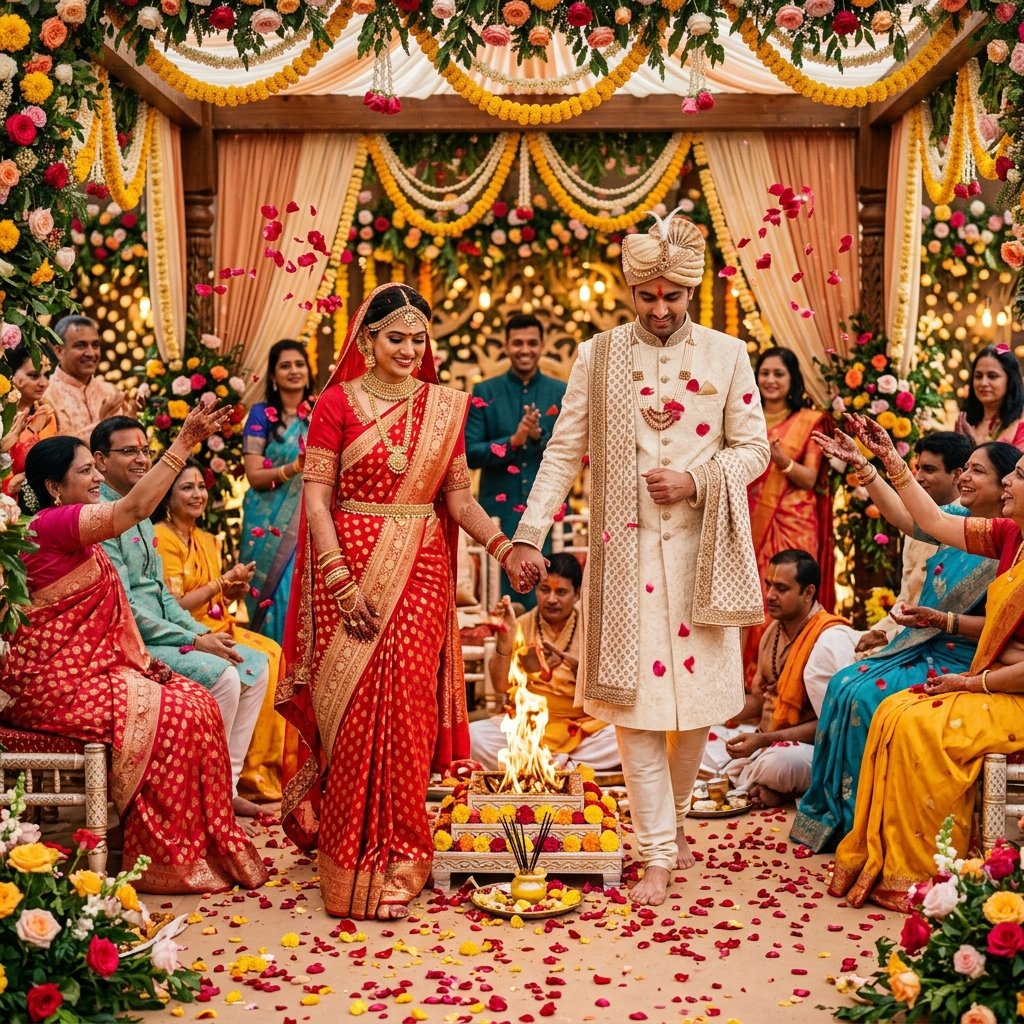
The Vivah Sanskar (Sacrament of Marriage) is the most significant of the 16 Vedic sacraments. It marks the transition of an individual from Brahmacharya (student life) to Grihastha Ashram (householder life). In Sanatan Dharma, marriage is not merely a social contract, but a divine and unbreakable union of two souls bound together by cosmic forces, witnessed by the sacred fire (Agni).
The Rig Veda and Grihya Sutras proclaim that the husband and wife are equal halves of a divine whole. Together, they perform Dharma (duty), Artha (wealth), and Kama (desire) to eventually attain Moksha (liberation).
The exact date and time (Muhurat) of the Vivah are meticulously calculated using the Janma Kundalis (birth charts) of both the bride and the groom to ensure planetary alignment for a prosperous life.
A Vedic Vivah requires a grand setup of pure spiritual ingredients. Key items include:
The Vivah Sanskar comprises several crucial steps: Kanyadaan (giving away the daughter), Panigrahana (holding hands), and the most vital, Saptapadi (the seven steps around the fire). During Saptapadi, the couple chants the eternal Vedic vow:
"With these seven steps, you have become my eternal friend. May I never fall from your friendship, and may you never fall from mine."
The Acharya (Vedic Priest) plays the role of the cosmic witness. He invokes the deities (Brahma, Vishnu, Mahesh, and the Navagrahas) to bless the couple. The flawless chanting of Sanskrit mantras by the Acharya ensures that the cosmic energies are properly channeled into the marital bond.
A: Kashi (Varanasi) is the city of Lord Shiva and Mata Parvati. Tying the knot in this eternal city brings the direct blessings of Mahadev for a blissful married life.
A: Yes! We arrange complete Vedic setups along the Ghats or at heritage venues in Kashi, providing highly qualified Kashi Pandits and authentic Samagri.