Graduation from the Gurukul
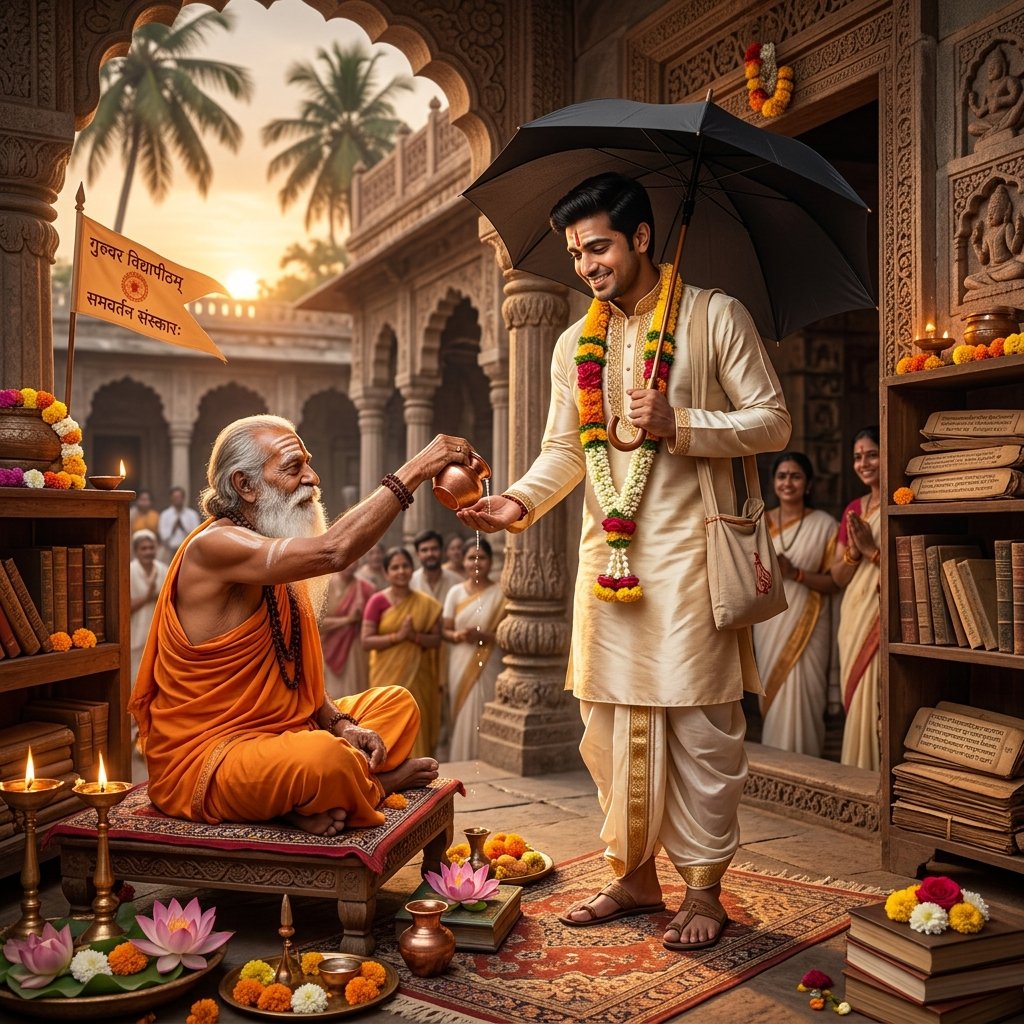
The Samavartana Sanskar (Graduation Ceremony) is the fourteenth of the 16 Vedic Sanskars. 'Sama' means fully, and 'Avartana' means returning. It literally translates to 'returning home from the Gurukul'. This glorious ceremony marks the successful completion of a student's formal education (Brahmacharya Ashram) and their readiness to enter society as an independent, educated, and responsible adult.
Samavartana is a profound transition. The student, who lived a life of ultimate austerity (wearing deer skin, begging for alms, sleeping on the floor), is now bathed in fragrant waters, dressed in fine clothes, and adorned with jewelry. They are honored with the title of 'Snataka' (one who has bathed in knowledge). It signifies that wealth and comfort are only to be enjoyed after one has acquired wisdom and discipline.
The timing depends entirely on the completion of the student's curriculum, which historically lasted anywhere from 12 to 24 years.
The ritual items shift from those of a mendicant to those of a respected householder (Grihastha).
The student performs a final Havan, discarding the wooden staff and deer skin into the water. He is bathed with fragrant herbs (Snana). Dressed like a king, he presents his final Guru Dakshina. The Guru then delivers the 'Dikshant Bhashan' (Convocation Address), instructing the student on ethics, social duty, and continuous learning, chanting:
"Revere your Mother as God. Revere your Father as God. Revere your Teacher as God. Revere your Guest as God."
Modern university convocations—wearing gowns, receiving degrees, and listening to a keynote speaker—are directly inspired by the ancient Samavartana. This Sanskar reminds modern graduates that education is not merely a tool for earning money, but a sacred responsibility to serve society and uphold truth.
A: Snataka means 'one who has bathed'. It implies that the student has been washed clean of ignorance and is now pure, radiating with knowledge. It is the Vedic equivalent of a 'Graduate'.
A: Yes. In Vedic tradition, one must complete their education and become a Snataka before they are eligible to enter the Grihastha Ashram (householder life) through Vivah (marriage).